
Finding practical email newsletter ideas for small business is harder than it looks. Most guides list vague suggestions like “send a discount” or “share a tip of the week” — which doesn’t help you write a campaign that actually gets opened. I manage email marketing for several clients through my freelance work, and the newsletters that consistently perform well share a few traits: they’re specific, useful before they’re promotional, and they feel like they came from a real person. Here’s what actually works, broken down by campaign type so you can start building immediately.
Table of Contents
- Why Email Newsletters Still Work for Small Businesses
- Welcome Series: Your First and Most Important Campaign
- Promotional Campaign Ideas That Don’t Feel Pushy
- Educational Content Ideas That Build Trust
- Re-engagement Campaign Ideas
- Seasonal and Event-Based Newsletter Ideas
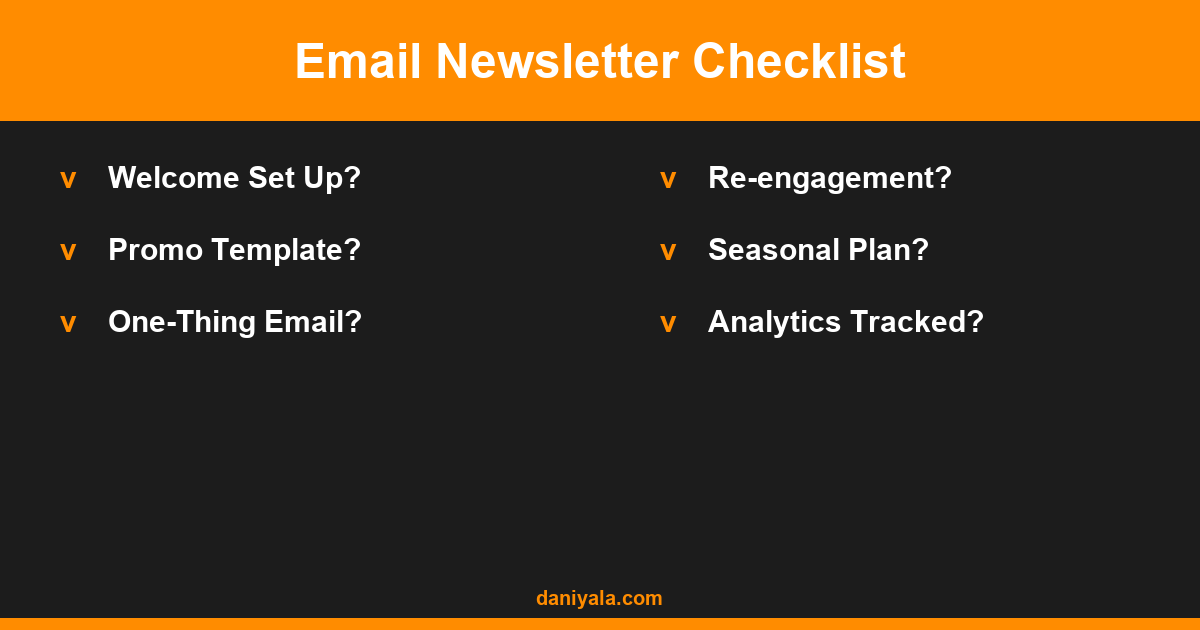
- How to Measure Whether Your Email Newsletter Is Working
- Frequently Asked Questions
Why Email Newsletters Still Work for Small Businesses
Every few years someone declares email marketing dead. It hasn’t happened. Email integration remains one of the most-installed plugin categories on WordPress.org because the channel still delivers. The core reason: you own your list in a way you don’t own social media followers. If a platform changes its algorithm or shuts down, your subscriber list goes with you. That ownership is the fundamental reason to invest in building it.
For a small business especially, email newsletters build the kind of sustained relationship that turns a one-time buyer into a repeat customer. The goal isn’t to maximise open rates on every send — it’s to stay present and genuinely useful in someone’s inbox over months and years.
I cover the full strategy in my email marketing guide. This article focuses specifically on the campaign and content ideas you can put into production this week.
Welcome Series: Your First and Most Important Campaign
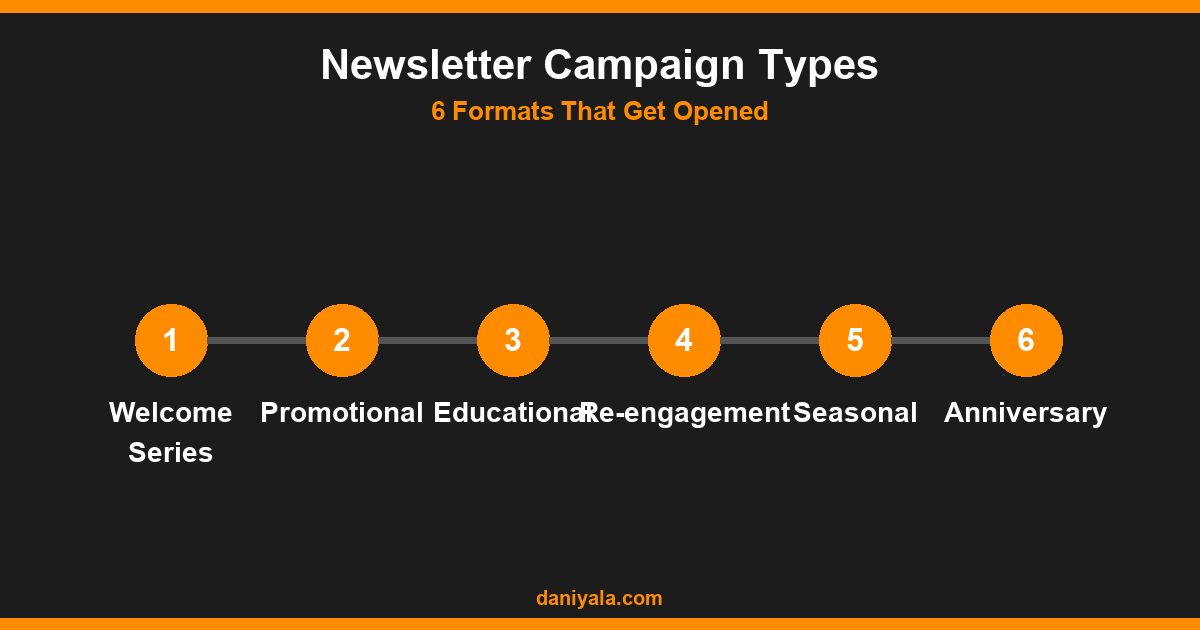
The welcome series is the highest-performing email campaign most small businesses never set up. The first email a new subscriber receives gets dramatically higher open rates than any subsequent campaign — often 3–4x the list average. Here’s how to structure a simple three-email welcome sequence:
- Email 1 — Send immediately: Deliver whatever you promised (discount, free resource, guide). Remind them who you are and what they can expect from your emails going forward.
- Email 2 — Send on day 3: Share your origin story or a specific piece of value — a customer success story, your best-performing blog post, or a tip that solves a common problem your audience has.
- Email 3 — Send on day 7: A soft introduction to your product or service. Not a hard sell — frame it as “here’s how I can help if you ever need it.” Include a clear but low-pressure CTA.
Three emails is enough for most small businesses. Anything longer risks people forgetting they signed up and marking you as spam before your relationship has even started.
Promotional Campaign Ideas That Don’t Feel Pushy
The best promotional emails don’t feel like ads — they feel like a relevant, well-timed offer from someone you trust. Formats that work consistently:
- The reason-why promotion: Tie the discount or offer to a specific reason — an anniversary, clearing stock, a product launch, or a quiet season. “We’re moving to a new studio and clearing inventory” feels more natural than a bare “SALE 20% OFF” banner.
- Subscriber exclusivity: Make the offer subscriber-only. “This isn’t going on the website” creates genuine reason to stay on the list — and to open emails regularly in case something good is inside.
- The countdown format: One email when the offer launches, one 24 hours before it ends. Two emails per promotion is usually enough — a third risks fatigue and higher unsubscribe rates.
- The waitlist campaign: If you’re launching something new, run a waitlist first. Send a teaser, then a “waitlist closes in 48 hours” email, then a launch email. The limited-access framing drives urgency without feeling manipulative.
For a full breakdown of how to structure these conversion-focused flows, the email marketing for small business guide has a dedicated section on promotional sequences.
Educational Content Ideas That Build Trust
Educational emails keep subscribers engaged between promotions. They position you as the expert and give people a reason to keep your newsletter in their inbox rather than unsubscribing when there’s nothing to buy.
- The “one thing” email: Pick one specific tip, technique, or insight from your work and explain it clearly in 200–300 words. No padding. “One thing I’ve noticed in every client project this month: most sites have internal links pointing to the wrong URL version.” That’s enough for a genuinely useful email.
- Behind-the-scenes: How you made a product or service decision, what goes into your delivery process, the tools you use daily. Small businesses can do this in a way large companies can’t — it creates genuine connection with people who want to support a real person, not a brand.
- Client stories (anonymised): “A client came to me with this specific problem. Here’s how we solved it and what the result was.” This does the work of a case study without requiring a formal write-up or permission from the client.
- Resource roundup: 3–5 genuinely useful links relevant to your audience — industry news, tools, or articles you found valuable. Keep the commentary brief and personal; your take on each item is what makes it worth reading versus just searching Google.
- Myth-busting: “The most common misconception I hear about [your topic].” Counter-intuitive content gets saved, shared, and replied to more than any other format in my experience.
Re-engagement Campaign Ideas
A large share of any email list stops opening emails after 6–12 months. Before you suppress or delete inactive subscribers, run a re-engagement campaign. The goal is to win them back or confirm they want to be removed — a smaller active list is always better than a large unengaged one for deliverability and sender reputation.
- The “still there?” email: Direct and honest. “I noticed you haven’t opened any of my recent emails — are you still interested?” Include a single CTA to confirm they want to stay. Keep it short. No hard sell, no desperation.
- The preference email: Ask what they’d like to hear about. Give them 3–4 content themes to choose from. This doubles as list segmentation — you now know what topics different segments actually want, which improves relevance going forward.
- The “here’s what you missed” email: A curated list of your best content from the past few months. Low effort to produce, sometimes enough to re-activate subscribers who drifted away during a busy period.
My email marketing best practices guide covers list hygiene, suppression strategy, and how to handle subscribers who don’t respond to re-engagement attempts without hurting your deliverability.
Seasonal and Event-Based Newsletter Ideas
Calendar-based emails are some of the easiest to plan and some of the most reliably opened, because subscribers are already in a particular mindset at that time of year.
- Start-of-year: Trends for the year ahead, a planning resource, or a goals-themed email. Works for almost any industry because people are already thinking about new starts in January.
- Pre-holiday: For product businesses, send a gift guide 2–3 weeks before major holidays. For service businesses, send a “book before we’re full” email in November or December before the holiday rush kicks in.
- The summer slowdown: Acknowledge the quiet period honestly. A “we’re keeping it shorter this month” email actually gets opened — people appreciate transparency about your content cadence more than filler content.
- Your business anniversary: Share what you’ve learned, thank your subscribers for being part of the journey, offer something exclusive. Authentic and low-effort to write — and it builds the kind of personal connection that keeps people subscribed long-term.
- Industry-specific events: Tax season for an accountant, planting season for a garden centre, back-to-school for an education business. Tie your content to what’s relevant to your audience right now and you’ll see higher engagement than generic evergreen sends.
How to Measure Whether Your Email Newsletter Is Working
Open rates matter but they’re not the whole picture — Apple Mail Privacy Protection has inflated reported open rates across the board since 2021. Focus on metrics that represent real engagement:
- Click rate: The percentage of subscribers who click at least one link. A click is a genuine action. For most small business newsletters, 2–5% click rate is healthy.
- Revenue or leads generated: If you’re using UTM-tracked links, you can tie email clicks to purchases or form submissions in GA4 and see exactly what each campaign contributed.
- List growth vs unsubscribes: Is your list growing faster than you’re losing people? Track both sides monthly. A list that grows by 50 but loses 40 is in trouble.
- Reply rate: If people reply to your emails, that’s the strongest signal of genuine engagement. Encourage it explicitly — “hit reply and tell me what you think” — and track how many responses you get per campaign.
The what is email marketing guide covers how to set up proper tracking and analytics for your campaigns. If you’re ready to automate some of these sends, email automation explains how to trigger campaigns based on subscriber behaviour rather than calendar dates alone. For a practical look at Google’s own content quality guidance, the Google helpful content guidelines apply to email newsletter content just as much as web pages — prioritise depth and genuine usefulness over volume.
Frequently Asked Questions
How often should a small business send email newsletters?
Monthly is a reasonable minimum — enough to stay top of mind without overwhelming subscribers. Weekly works if you have genuinely useful content every single week, but most small businesses don’t and shouldn’t force it. Start with monthly or bi-weekly, establish consistency, then increase frequency only when you’re consistently producing content worth reading. Sporadic sending — once every few months — is worse for deliverability and engagement than a regular predictable schedule.
What’s the ideal length for a small business email newsletter?
There’s no single ideal length — it depends on content type. A promotional email should be short: one clear offer, one CTA, under 300 words. An educational email can run 400–600 words if every sentence adds value. A roundup newsletter with multiple links can be longer if each item is genuinely useful. The rule: cut anything that doesn’t serve the reader, regardless of how it affects the overall length.
Which email platform is best for small businesses?
Mailchimp’s free plan works for getting started with up to 500 contacts. Flodesk is popular for product businesses and designers for its visual editor. ConvertKit suits content creators and service providers who want to segment subscribers and automate behavioural triggers. The best platform is the one you’ll actually use consistently — start with whatever has the lowest friction for your workflow and upgrade when you’ve genuinely outgrown it.
What’s a good open rate for a small business email newsletter?
Treat reported open rates with caution since Apple Mail Privacy Protection inflated them significantly from 2021 onwards. A click rate of 2–5% is a more reliable indicator of healthy engagement. Focus more on whether your clicks actually lead to conversions — someone who clicks and buys matters more than someone who opens and does nothing.
How do I grow my email list for a small business?
The most reliable method is a clearly valuable opt-in offer — a discount, a useful guide, a free template, or exclusive content your audience can’t get elsewhere. Place the opt-in form prominently on your highest-traffic pages: above the fold on the homepage, embedded in your best blog posts, and as an exit-intent popup. Growing the list slowly with the right audience is better than fast growth through broad incentives that attract people with no genuine interest in what you sell.
Need help implementing this? I’m Daniyal — freelance SEO & WordPress expert. Contact me or find me on Upwork.





 by Daniyal © 2026 All Rights Reserved