
Studying email marketing examples is one of the fastest ways to improve your own campaigns — not because you copy them, but because you start recognizing what the structural decisions are and why certain choices work. In my email automation work with clients, I’ve found that looking at well-constructed examples builds an intuition for subject lines, timing, and email structure that reading theoretical guides never quite develops. This article breaks down the most important email types with real examples and the reasoning behind what makes each effective.
Before you look at any example, though, it helps to understand what separates emails that perform from emails that don’t. For a foundational understanding of how email marketing works and why it still outperforms most digital channels by ROI, my complete email marketing guide covers the strategic layer that makes these examples meaningful.
Table of Contents
- What Makes a Great Email Marketing Example
- Welcome Email Examples That Convert
- Promotional Email Examples That Drive Sales
- Newsletter Email Examples People Actually Open
- Abandoned Cart Email Examples
- Re-Engagement Email Examples
- Transactional Email Examples
- How to Apply These Examples to Your Own Campaigns
- Frequently Asked Questions
What Makes a Great Email Marketing Example
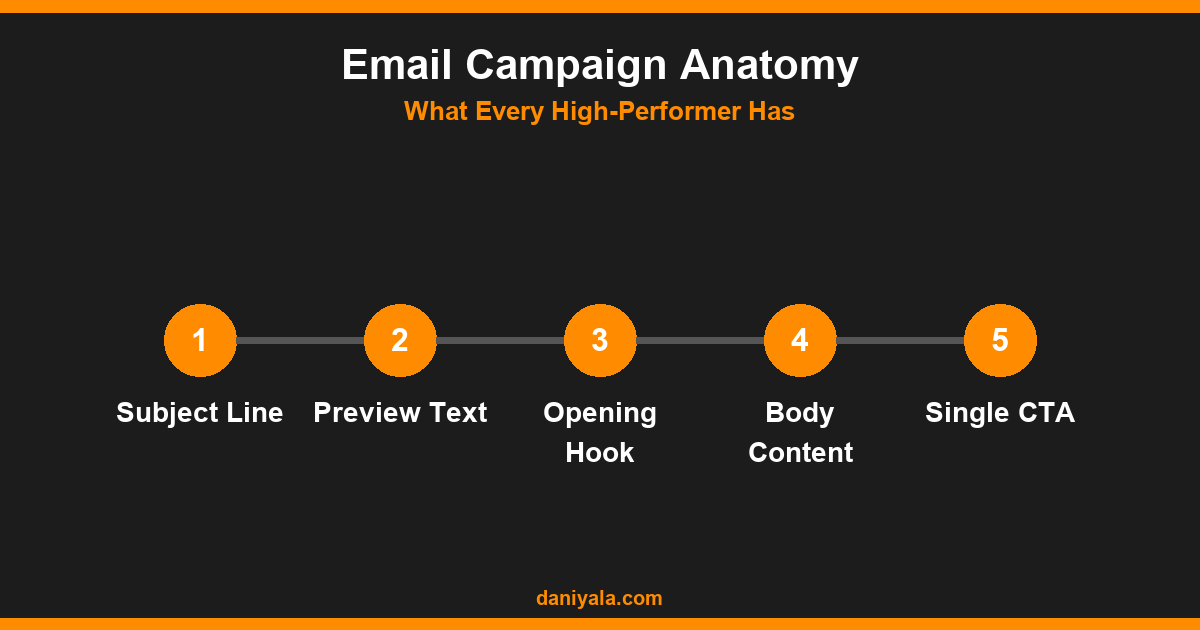
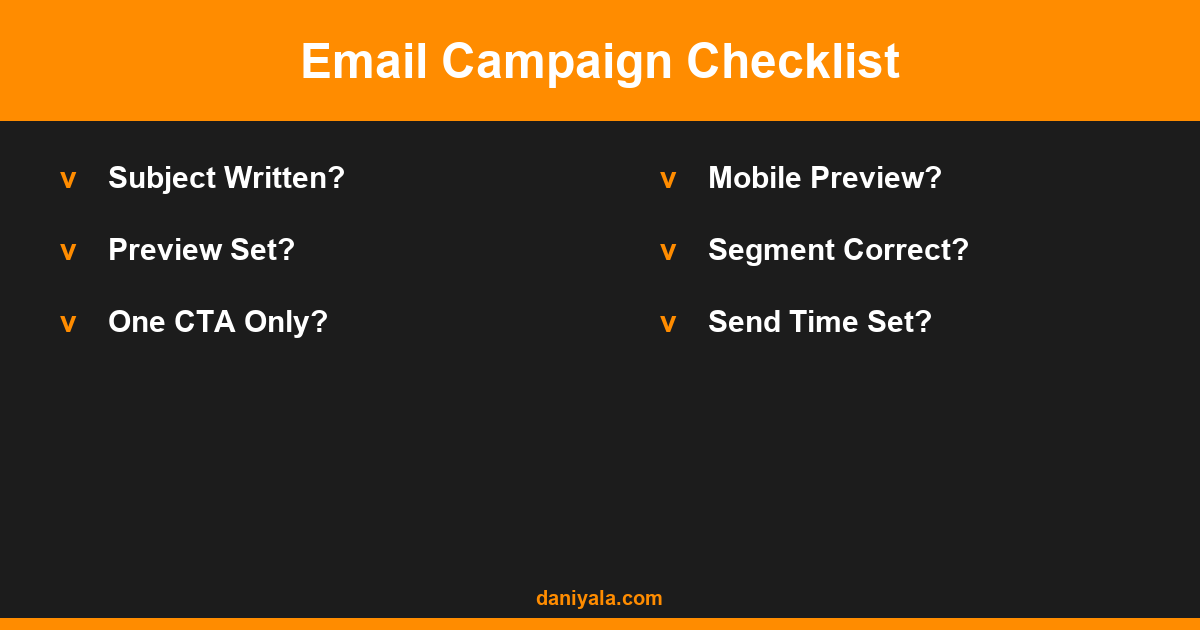
Any email worth studying has made deliberate decisions about these four elements:
- Subject line: The only job of the subject line is to earn the open. Great subject lines create curiosity, communicate a specific benefit, or surface a consequence (urgency, scarcity, problem recognition). Bad subject lines are either vague (“Check this out”) or overtly promotional (“50% OFF everything!!!”).
- Preview text: The snippet shown after the subject line in inbox previews. Most email marketers waste this by leaving it as the first line of the email body. Effective preview text functions as a second subject line, adding context or completing a thought.
- One primary call to action: High-performing emails almost always have one clear CTA, not three. Multiple CTAs compete with each other and reduce total click-through rate.
- Relevance to the recipient’s position in the customer journey: A welcome email and a win-back email have fundamentally different jobs. Matching the email’s content and tone to where the recipient is in their relationship with you is what separates a campaign from noise.
Welcome Email Examples That Convert
The welcome email has the highest open rate of any email type — typically 40–60%, compared to 20–25% for standard campaigns. Most subscribers are most engaged immediately after signing up, which makes this the highest-leverage email you’ll write.
What a strong welcome email includes:
- Subject line pattern: “Welcome to [Brand] — here’s what to do next” or “You’re in. Here’s what happens now.” Confirming the subscription and immediately signaling value rather than saying “Thanks for subscribing!”
- Immediate delivery of the promised lead magnet if that’s what prompted signup. Don’t make them click through multiple pages — put the download link in the email body.
- A brief “why you signed up” reminder: Reconnects the subscriber to their original motivation. One or two sentences on what they’ll get from being on your list.
- One primary CTA: Could be visiting your most valuable content, completing a profile, or browsing a core product category — but not all three at once.
- Your voice: Welcome emails that sound like they were written by a person, not a marketing department, perform better. Be direct and specific.
For a freelance service business like mine, the welcome email goes out immediately after contact form submission and includes a brief intro, what working together looks like, and a link to my portfolio. Open rates are consistently above 50% because the timing is perfect and the content matches exactly what the person wanted when they submitted the form. My guide on email marketing best practices covers welcome sequence structure in more detail.
Promotional Email Examples That Drive Sales
Promotional emails (sales, offers, product launches) are the most common type sent and the most often done poorly. The mistake is leading with the promotion before establishing why it matters to the reader.
Elements of promotional emails that actually convert:
- Benefit-first subject line: “Get your WordPress site audited before the price increases” rather than “SUMMER SALE — 20% off all audits.” The benefit framing produces higher open rates because it answers “what’s in it for me” before asking for a click.
- Context before offer: One short paragraph establishing the problem or need before revealing the promotion. “If your site has been losing rankings without a clear reason, an audit is where to start.” Then: “For the next 5 days, audits are available at [price].”
- Specific urgency: Genuine deadlines (“sale ends Friday at midnight”) outperform vague urgency (“limited time”). If the urgency isn’t real, your subscribers learn to ignore it.
- Social proof close to the CTA: A one-sentence quote from a client or a specific outcome (“helped 12 clients recover from Google algorithm drops”) immediately before the button increases click-through.
Tools like Mailchimp provide industry-specific email marketing resources and benchmarks that give you context for what open and click rates are realistic for your industry before you start optimizing promotional campaigns.
Newsletter Email Examples People Actually Open
Most business newsletters fail at the same thing: they’re about the sender’s business rather than useful to the reader. The newsletters with high long-term open rates treat each email as a standalone useful piece of content, not a digest of internal company news.
What makes a newsletter worth reading:
- A consistent, predictable format: Readers who know what to expect from your newsletter are more likely to open it. “Every Wednesday I share one practical SEO fix you can implement this week” is a newsletter people subscribe to intentionally — not one they vaguely remember signing up for.
- One primary insight or idea, not five: The temptation to fill a newsletter with multiple content blocks reduces the impact of each. One well-developed idea in 200–300 words outperforms five thin items.
- A human sign-off: Emails that close with a personal note (“working on an elementor redesign project this week — if you have questions about page builders, reply and I’ll try to address them”) signal that a real person is behind the newsletter. Reply rates increase, and replies are algorithm signals that keep your newsletters out of the promotions tab.
For ideas on what to include in newsletters across specific business types and niches, my guide on email newsletter ideas for small business covers 20 campaign types that work consistently across different industries.
Abandoned Cart Email Examples
Abandoned cart emails are among the highest-ROI automated emails you can set up for e-commerce — recovery rates of 5–15% of abandoned carts are realistic with a well-structured sequence. The window is short: the first email should send within 1 hour of abandonment.
A three-email abandoned cart sequence that works:
- Email 1 (1 hour after abandonment): Soft reminder. “You left something behind.” No discount — just a clear product image, name, and price, with a single CTA back to the cart. Subject line: “Still thinking it over? Your cart is saved.” This email alone recovers a significant portion of recoverable carts.
- Email 2 (24 hours later): Add social proof and address the most common objection. “Here’s what other customers say about [product]” plus a brief FAQ addressing the objection most likely causing hesitation (usually shipping cost, return policy, or product fit questions).
- Email 3 (72 hours later): If you’re willing to offer a discount, this is where it goes — not in email 1. “We’d like to earn your business. Here’s 10% off.” Making the discount email the last in the sequence ensures you’re not training customers to abandon carts just to get a discount.
Re-Engagement Email Examples
A re-engagement campaign targets subscribers who haven’t opened an email in 90–180 days. Before sending a win-back sequence, it’s worth acknowledging that some of these subscribers genuinely don’t want your emails anymore — and cleaning your list of non-engaged subscribers improves deliverability for the rest of your list.
Re-engagement sequence structure:
- Email 1: Direct acknowledgment. “We’ve noticed you haven’t opened our emails in a while — is our content still relevant to you?” Give them a clear one-click “yes, keep me” option. The honesty of this approach frequently gets opens from subscribers who had just been ignoring emails on autopilot.
- Email 2 (1 week later): Your best content or most valuable offer. “Before we remove you from our list, we wanted to share our most useful resource for [their likely interest].” Link to your highest-value piece of content.
- Email 3 (1 week later): The breakup email. “This is our last email — if you’d like to stay subscribed, click here. Otherwise, we’ll remove you from our list in 7 days.” The breakup email typically has the highest open rate of the sequence because the subject line creates genuine consequence.
Subscribers who don’t re-engage after this sequence should be removed or suppressed. For email marketing for specific business types and the sequences that work for service businesses, my guide on email marketing for small business covers the full automation strategy.
Transactional Email Examples
Transactional emails (order confirmations, password resets, shipping notifications) have the highest open rates of any email type because they’re expected and immediately relevant. Most businesses under-optimize them — treating them as purely functional when they’re prime opportunities to add value and reduce support volume.
What separates good transactional emails from missed opportunities:
- Order confirmation: Goes beyond “your order has been received.” Include what the customer ordered, when they can expect it, a direct link to track the shipment, and a one-line answer to the most common post-purchase question (“questions about your order? reply to this email”).
- Shipping confirmation: Tracking link is the primary CTA. Secondary: “while you wait, these guides are relevant to what you purchased” — links to documentation or use guides, not upsells (save those for after delivery).
- Password reset: Clear, brief, with an explicit expiry time on the reset link. Include a note at the bottom: “didn’t request a password reset? You can safely ignore this email — your account is still secure.” Reducing user anxiety here cuts down on support contacts.
Campaign Monitor’s email marketing resource library includes detailed transactional email templates and guides for different platforms that are worth reviewing when setting up your first automated sequences.
How to Apply These Examples to Your Own Campaigns
The most common mistake marketers make when studying email examples is trying to replicate the surface details — the subject line format, the color scheme, the layout — rather than the underlying logic. What to actually extract from any email example you study:
- What customer state does this email address? (Just subscribed, just purchased, hasn’t engaged, about to churn) — match your email’s job to the recipient’s situation.
- What is the single action this email wants the reader to take? Strip everything that doesn’t support that one action.
- Why would the reader care? The answer to this question is your first paragraph — not your company intro, not a generic statement about your services.
For the foundational concepts behind what makes email subscribers engage — including list segmentation, send timing, and deliverability factors — my guide on what email marketing is and how it works covers the mechanism underneath all of these examples.
Frequently Asked Questions
What type of email marketing gets the highest open rates?
Welcome emails consistently achieve the highest open rates — typically 40–60% — because they arrive at the moment of maximum subscriber engagement, immediately after signup. Abandoned cart emails and re-engagement “breakup” emails also perform above average because they’re triggered by specific subscriber behavior and feel personally relevant rather than broadcast.
How many emails should a welcome sequence include?
Three to five emails over 7–14 days is a reliable welcome sequence length for most businesses. Email 1 delivers the promised value immediately. Emails 2 and 3 introduce your most useful content or service. Email 4 or 5 makes a soft offer or asks a question to segment future sends. Beyond five emails, you’re into ongoing nurture territory rather than onboarding.
What should I write in an email subject line?
Write subject lines that communicate a specific benefit or create genuine curiosity — not generic promotional language. “How I reduced a client’s page load time from 8s to 1.2s” outperforms “Read our latest blog post.” Specificity, a clear benefit, or a consequence (urgency, scarcity) are the three most reliable subject line mechanisms. Test two versions on small segments of your list before sending to the full list.
How often should I email my list?
Consistency matters more than frequency. Emailing once per week, every week, outperforms emailing four times in one week and then going silent for a month. Start at a frequency you can sustain indefinitely — for most small businesses, once per week or once every two weeks is realistic. Increase frequency based on engagement data, not ambition.
What makes email marketing examples actually useful to study?
Useful examples show you the structural decisions, not just the aesthetics. When studying an email, ask: what is the single action this email wants? What customer state does it address? What’s the opening line doing? The answers to these questions transfer to your own campaigns regardless of your industry or offer.
Need help setting up email sequences that actually convert? I’m Daniyal — freelance email automation & WordPress expert. Contact me or find me on Upwork.



 by Daniyal © 2026 All Rights Reserved